Mostrando entradas con la etiqueta Miniatures. Mostrar todas las entradas
viernes, 13 de febrero de 2015
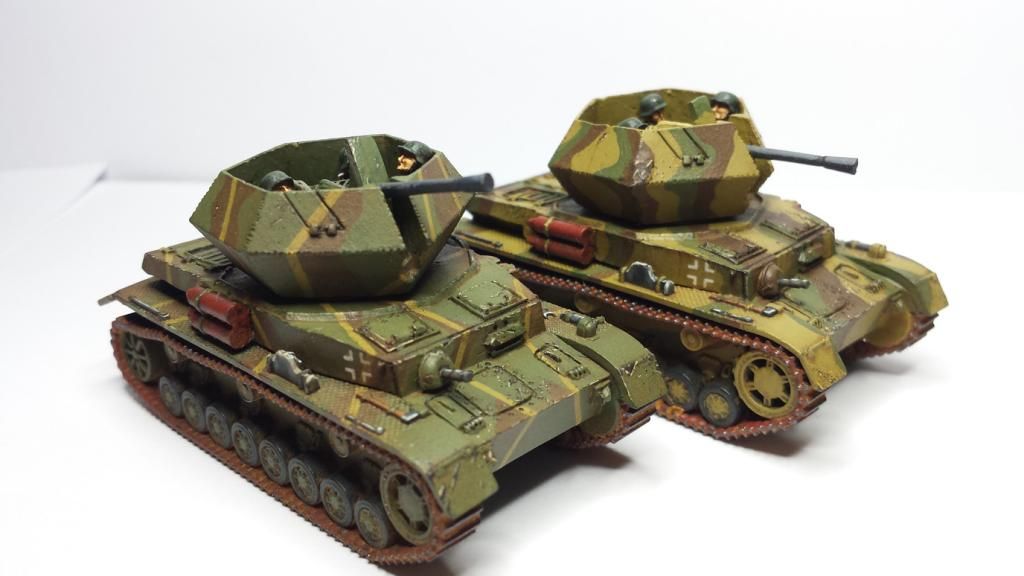
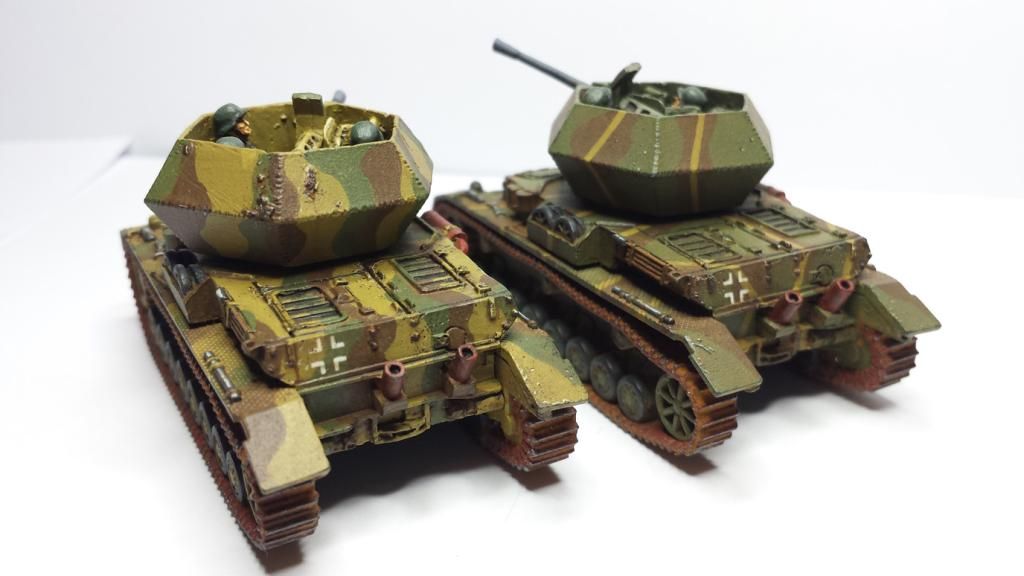
Flakpanzer IV 'Ostwind'
(English text below)
El Flakpanzer IV 'Ostwind' fue el último cañón AA autopropulsado basado en el chasis del Panzer IV que entró en servicio (su hermano mayor, el Kugelblitz nunca llegó a tiempo). Habiendo perdido la superioridad aérea, la Wehrmacht necesitaba una plataforma AA más capaz para proteger a sus Panzers de los temidos Jabos aliados. Así pues se mejoró el diseño del Wirbelwind añadiendo el potente 3.7 cm Flak 43, superior en alcance y poder de detención.
The Flakpanzer IV 'Ostwind' was the last Self-Propelled AA Gun based on the Panzer IV chassis who entered service (its bigger brother, the Kugelblitz never made it in time). Having lost air superiority completely, the Wehrmacht needed a more capable SP AA to shield its battered Panzers from the dreaded Allied Jabos. Thus, they improved the Wirbelwind design with the powerful 3.7 cm Flak 43, superior in range and stopping power.
lunes, 5 de enero de 2015
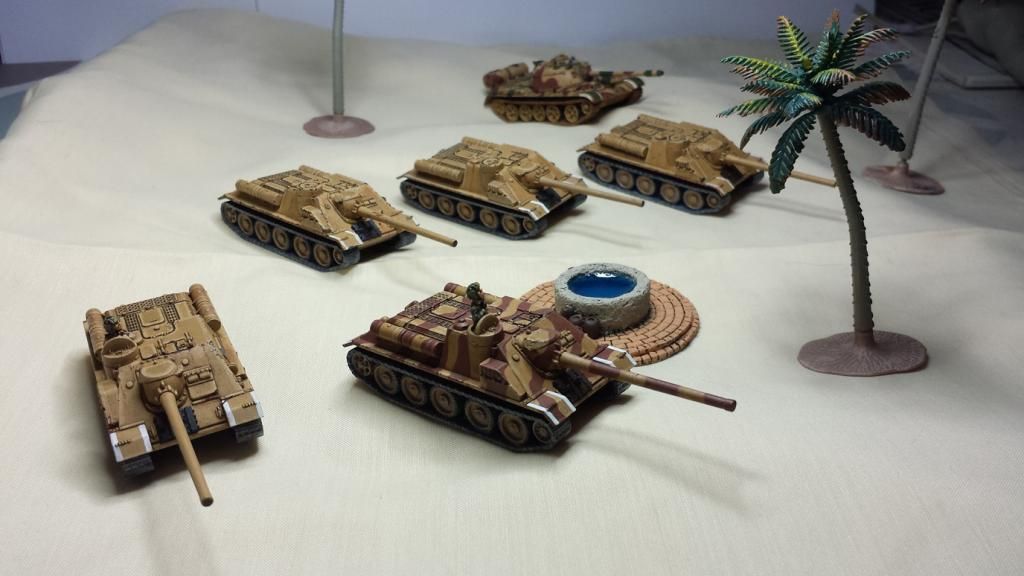
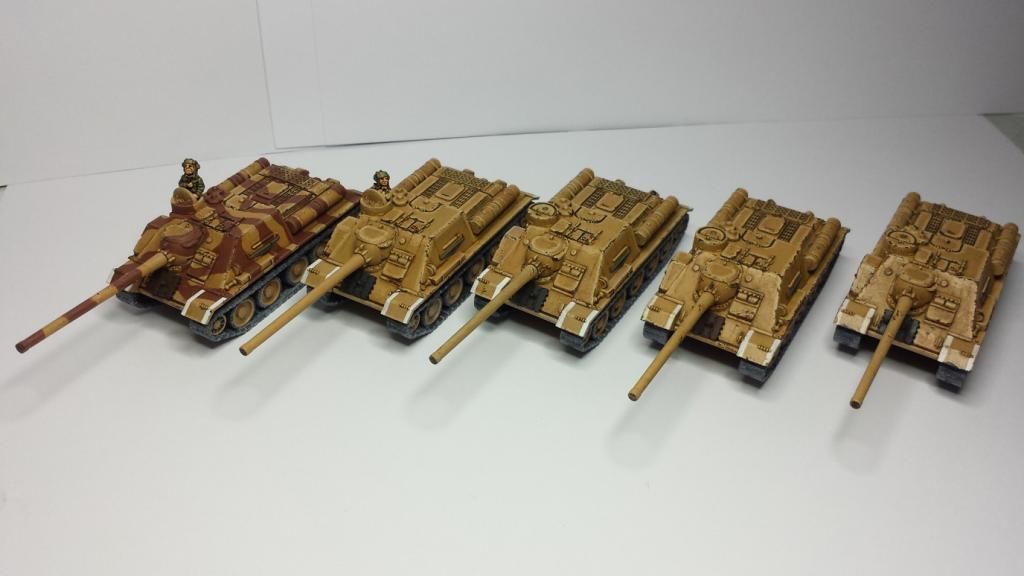
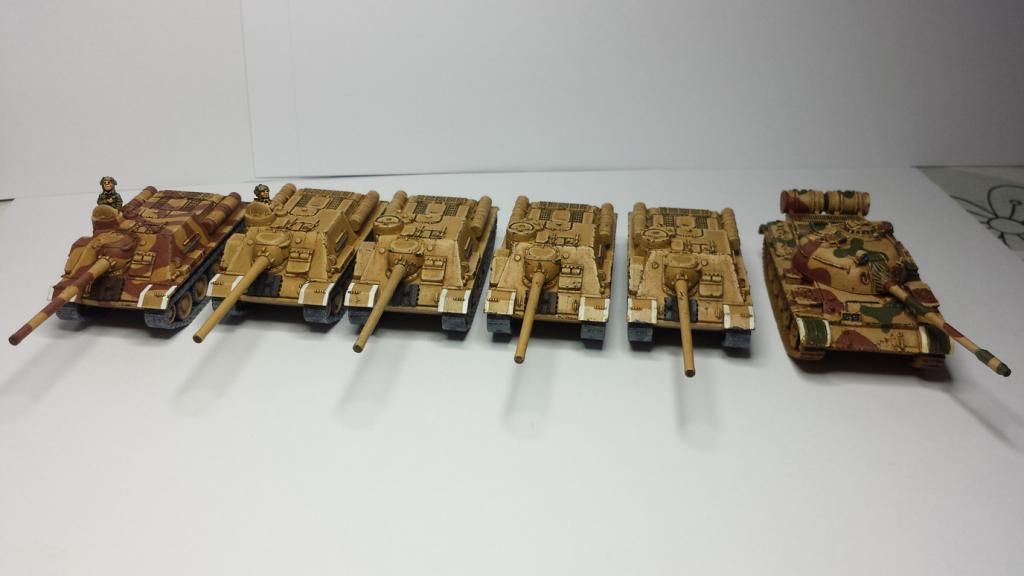
UAR SP Anti-Tank Company (SU-100M)
(English text below)
Hace algún tiempo, completé la siguiente entrega de mi lista árabe de carros de la Guerra de los Seis Días: la Compañía de SU-100M. Básicamente se trata del mismo vehículo que luchó en la Segunda Guerra Mundial, con algunas pequeñas mejoras para su adaptación a un entorno desértico (la enorme caja de respetos en el lado derecho es la característica externa más notable). Jugaron un papel importante en ambas guerras árabe-israelíes y desempeñaron bien el papel para el que fueron diseñados.
Some time ago, I completed the next installment of my Arab tank list from 1967 6-Day War: the SU-100M Company. Basically, is the same vehicle who fought in the WWII with minor improvements to adapt it to a desert environment (the sizeable stowage box on the right side is the most noticeable external feature). They played an important role in both the Arab-Israeli Wars and performed well their intended role.
miércoles, 24 de septiembre de 2014
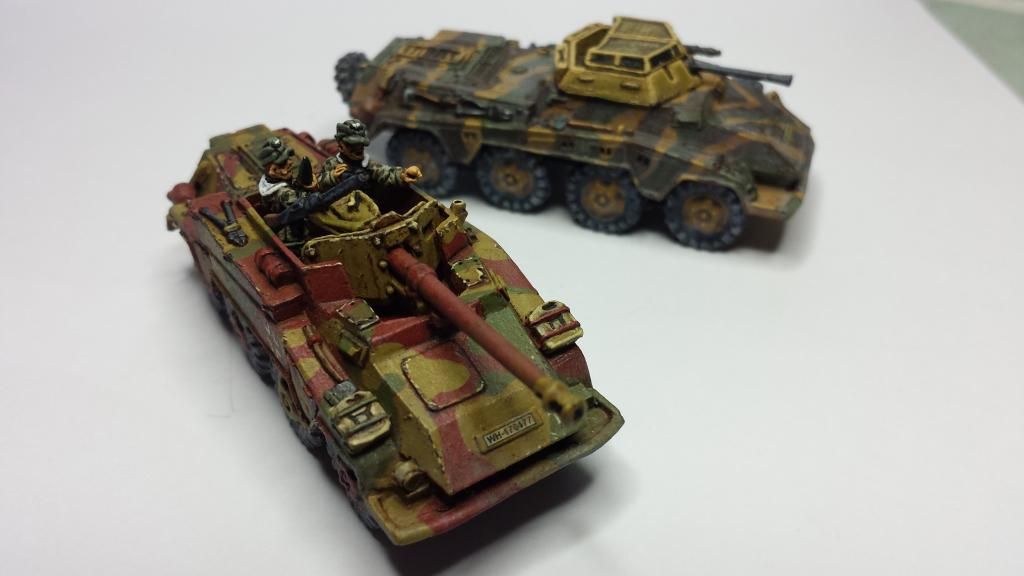
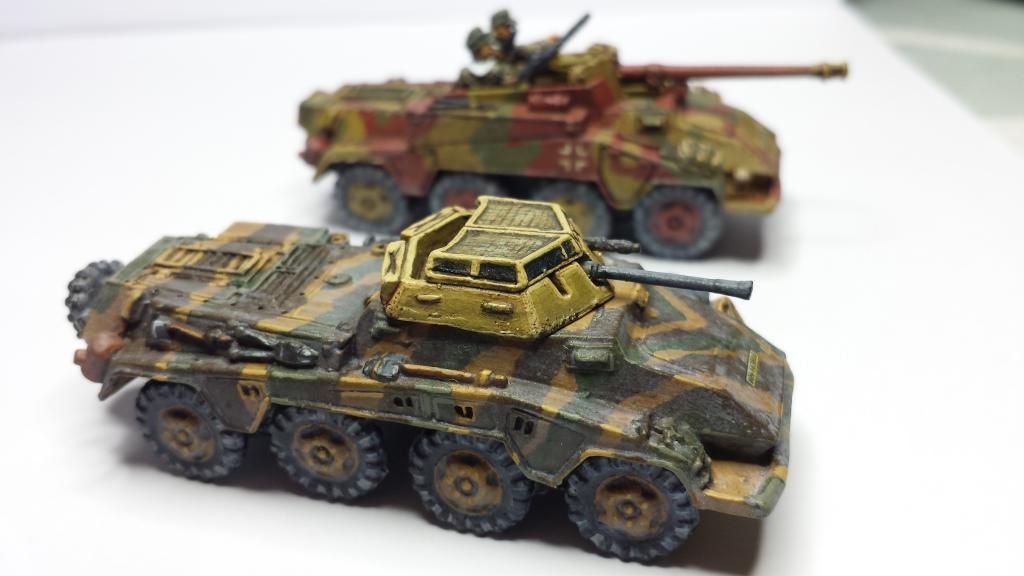
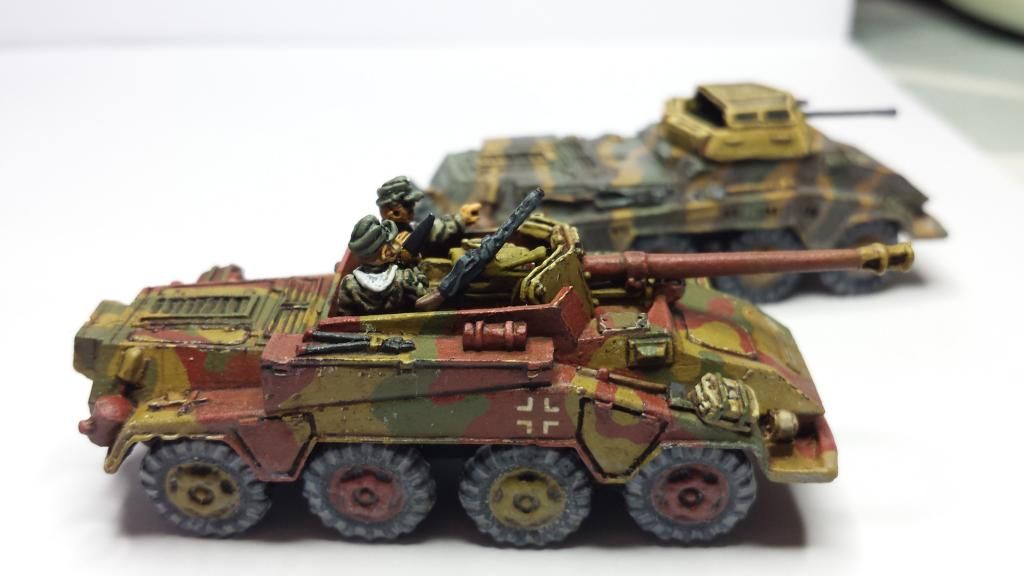
Panzerspäh 1945 (Sd. Kfz. 234/1 & Sd. Kfz. 234/4)
(English text below)
Una de las características más notables del 'Desperate Measures' es la (inesperada) inclusión de in montón de estupendos pelotones de Reconocimiento diferentes. Escogí los Puma sobre el resto gracias a su uso multipropósito (un PaK 40 móvil es algo muy serio). Además, me sobraba uno de mi trío original desde que Battlefront reconociese que las patrullas históricas de Puma eran de 2 vehículos, no de 3, y lo corrigiese en los libros.
One of the most interesting features from the 'Desperate Measures' sourcebook was the (unexpected) inclusion of many good Recce options. I chosed the Pumas over the rest due to their multi-purpose approach (a mobile PaK 40 is serious business). Also I had a surplus Puma from my original trio, that was in storage since Battlefront realised that the historical Puma patrols were comprised of 2 vehicles instead of 3 and revised it in the books.
Una de las características más notables del 'Desperate Measures' es la (inesperada) inclusión de in montón de estupendos pelotones de Reconocimiento diferentes. Escogí los Puma sobre el resto gracias a su uso multipropósito (un PaK 40 móvil es algo muy serio). Además, me sobraba uno de mi trío original desde que Battlefront reconociese que las patrullas históricas de Puma eran de 2 vehículos, no de 3, y lo corrigiese en los libros.
jueves, 18 de septiembre de 2014
Panthers Ahoy!
(English text below)
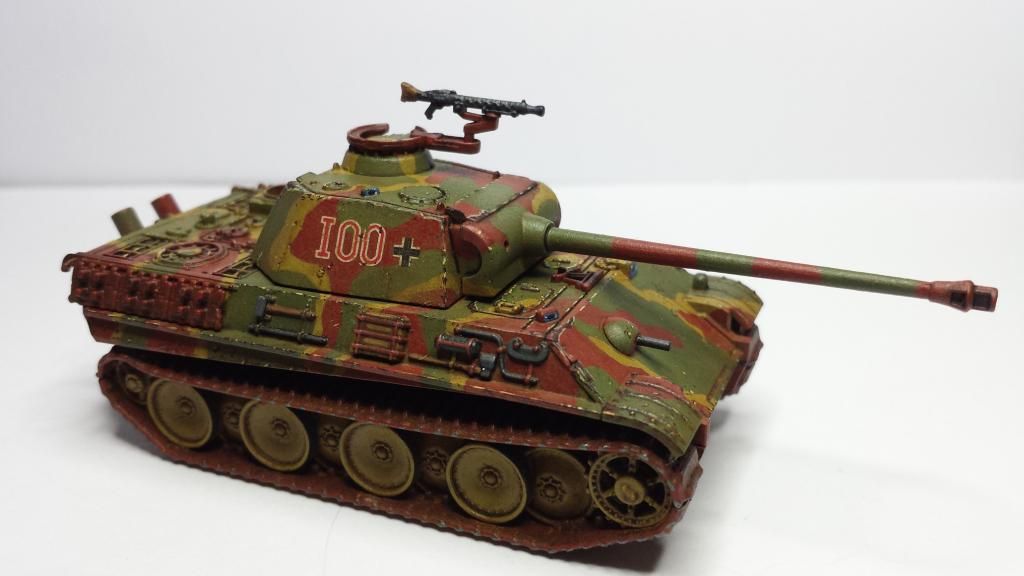
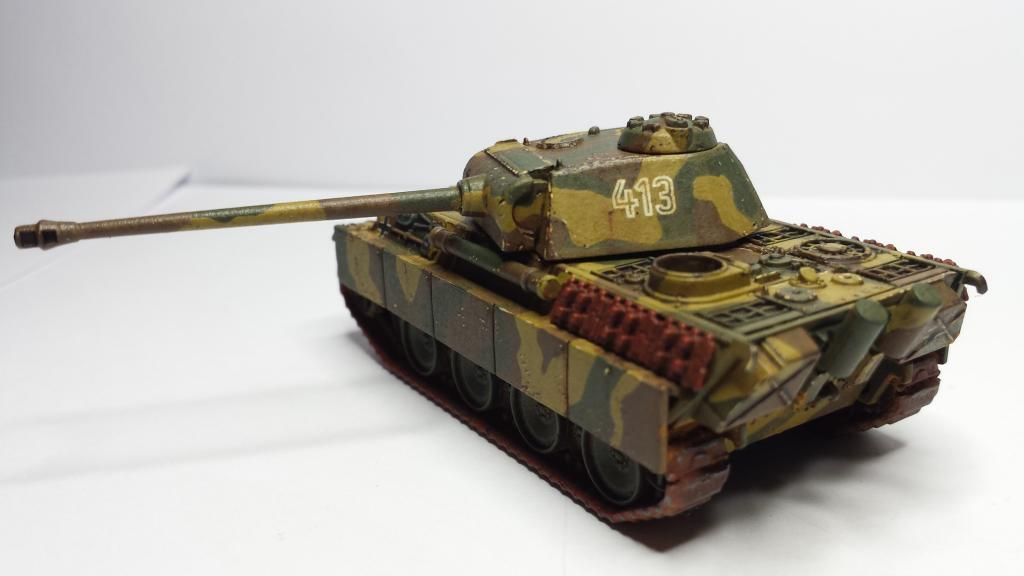
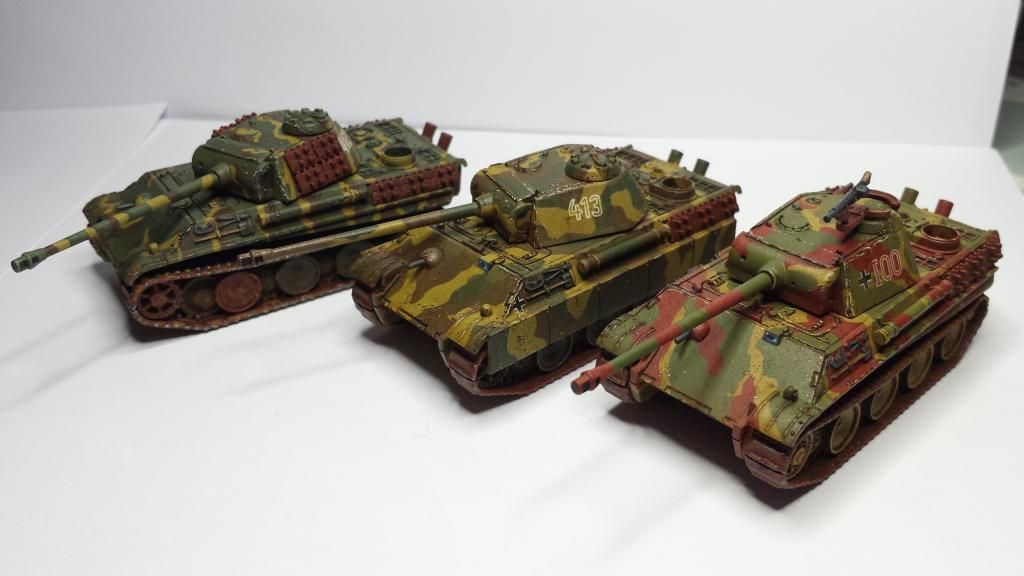
Allá por Abril, acaricié la idea de completar una lista Ausbildungs para la II Liga Walküre. Pensé en conformar una Compañía viable con un núcleo duro de Panthers, a 8 Pelotones. Meses después he dejado aparcada esa idea en favor del enfoque más tradicional del Panzer Kampfgruppe. Las listas que fui diseñando resultaban más compactas y redondas, e igualmente era capaz de reunir a todos mis Panthers a la vez que 'reciclaba' viejos pelotones de otras listas (ahorrar siempre es una buena decisión).
Back in April, I embraced the idea of building an Ausbildungs list to participate in our II Walküre League. Honestly, my intentions were about building a 8-Platoon Company around a powerful Panther core. Months later, that idea was set aside for a more traditional approach, the Panzer Kampfgruppe. The lists I engineered resulted more compact and 'round' and I was able to muster all my 5 Panthers while still 'recycling' old Platoons (a good decision, money-wise).
| The fresh painted Panthers |
sábado, 28 de junio de 2014
UAR Debabh Company (T-55)
(English text below)
Siendo un fan de los blindados soviéticos de la Guerra Fría, las hordas árabes del 'Fate of a Nation' enseguida captaron mi atención (vale, las preciosas miniaturas de Battlefront tuvieron algo que ver). Aunque creo que el libro está algo descompensado en favor de los israelíes, la oportunidad de alinear una fuerza considerable de la Guerra Fría era demasiado buena para dejarla escapar. Así que engañé a algunos amigos para entrar en ello, dejándoles a los poderosos (y asequibles) israelíes.
As a Soviet Cold War hardware fan, the UAR hordes from 'Fate of a Nation' quickly caugh my eye (the beautifully crafted Battlefront's T-55 played a crucial role too). Albeit I think the book is slightly unbalanced, with the Arabs on the receiving end, the opportunity to field a sizable Cold War force was too good to let it go to waste. So I tricked some of my friends into it and let them play the powerful (and affordable) Israelis.
domingo, 25 de mayo de 2014
WIPs
miércoles, 12 de febrero de 2014
Building the Ausbildungs - Part 1 - HQ Panthers!
(English text below)
Con la salida del nuevo libro para Late War, 'Desperate Measures', empecé a acariciar la idea de construir una unidad acorazada ad hoc de principios de 1945 hecha a base de carros supervivientes de varias unidades, vehículos de entrenamiento y tanques procedentes de los talleres. Esta variedad, por un lado, me permitirá 'reciclar' vehículos que prestan apoyo en pequeño número a otras Compañías, como los StuGs o los Brummbär, con lo que sólo me hará falta alguna adquisición puntual para completar la lista.
With the release of the new intelligence book for Late War, 'Desperate Measures', I began to cherish the idea of building a motley ad hoc armored unit from early 1945, made of surviving tanks from several combat units, poorly equipped training vehicles and refurbished units from several workshops. This diversity will allow me to 'recycle' tanks and Panzerjäger that currently support other infantry companies in small numbers, such as StuG or Brummbär, so I only need to make a handful of purchases to complete the list I want to field.
martes, 2 de julio de 2013
Messerschmitt Me 262 A-2 'Sturmvogel'
(English text below)
El Me 262 A-2 "Sturmvogel" ("ave de tormenta") fue la versión definitiva de ataque al suelo del exitoso reactor diseñado por el equipo de ingenieros de "Willy" Messerschmitt. Si bien el concepto y los primeros trabajos comenzaron antes de la Segunda Guerra Mundial, las dificultades técnicas relacionadas con su planta motriz retrasaron su entrada en servicio hasta Julio de 1944. Apenas se completaron 1400 ejemplares hasta el final de la Guerra, aunque no más de 200 estuvieron operativos al mismo tiempo. Reclamaron unas 550 bajas aliadas perdiendo 100 ejemplares en el aire.
The Me 262 A-2 "Sturmvogel" ("stormbird") was the final ground attack version of the successful jet fighter designed by the engineering bureau of 'Willy' Messerschmitt. While the concept itself and the first works started before World War II, technical difficulties related to its engine delayed its entry into service with the Luftwaffe until July 1944. Only 1400 units were completed until the end of the war, although no more than 200 were operational simultaneously. They claimed 550 Allied kills losing about 100 Me 262s in the air.
miércoles, 15 de mayo de 2013
Sd. Kfz. 250/5 & 250/9 ('neu')
(english text below)
lunes, 18 de marzo de 2013
21cm Nebelwerfer 42
(english text below)
El 21cm Nebelwerfer 42 fue diseñado como una versión mejorada del 15cm Nebelwerfer 41, con un alcance mayor y un diseño más simple. Debido al aumento en el tamaño de los cohetes, el número de tubos tuvo que ser reducido de 6 a 5 para evitar problemas de estabilidad. Sirvió con las Nebeltruppen, originalmente a cargo de Guerra Química y la dispersión de humo, pero en lugar de eso acabó disparando principalmente proyectiles de alto explosivo. Los 21cm NbW 42 se organizaban en baterías de seis lanzadores, con tres baterías por batallón. Estos batallones se integraban en los Werfer-Regiments independientes a razón de tres batallones por regimiento.
The 21cm Nebelwerfer 42 was designed as an improved version of the 15cm Nebelwerfer 41, with a longer range and a simpler design. Due to the increase in size of the rockets, the number of barrels had to be reduced from 6 to 5, to avoid stability issues. It served with the Nebeltruppen, originally in charge of Chemical Warfare and Smoke, but ended firing High Explosive shells instead. The 21cm NbW 42 were organized into batteries of six launchers, with three batteries per battalion. These battalions were integrated into independent Werfer-Regiments (three battalions formed a regiment).
miércoles, 16 de enero de 2013
Sd.Kfz. 166 Sturmpanzer IV "Brummbär"
(English text below)
A principios de 1943, la firma berlinesa Alkett fue seleccionada para desarrollar un nuevo tanque de asalto pesado basado en el chasis del Panzer IV. Diseños anteriores, como el StuIG 33, también fabricado por Alkett, fueron considerados simples soluciones provisionales y suspendidos en consecuencia. El vehículo resultante fue equipado con el 15cm Sturmhaubitze 43, un obús desarrollado a partir del cañón de infantería sIG 33, y protegido por una masiva superestructura blindada. Su peso y gran retroceso llevaban al límite el chasis del Panzer IV, y los primeros modelos estaban faltos de potencia y padecían problemas de transmisión.
In early 1943, the Berlinese firm Alkett was selected to develop a new heavy assault tank based on the Panzer IV chassis. Previous designs, like StuIG 33, also manufactured by Alkett, were considered as interim solutions, and subsequently discontinued. The resulting tank was armed with the 15cm Sturmhaubitze 43, a tank mounted howitzer developed from sIG 33 infantry gun, encased in a massive sloped armor superstructure. Its weight and recoil proved to be too much for the Panzer IV chassis, though, and early-mid production models were underpowered and prone to transmission problems.
lunes, 31 de diciembre de 2012
8.8cm FlaK 36/37
(English text below)
El 8.8cm FlaK 18/36/37 fue, por méritos propios, uno de los cañones más famosos y temidos no sólo de la Segunda Guerra Mundial, sino de todos los tiempos. Fue empleado por las diversas ramas de la Wehrmacht, en un principio como cañón antiaéreo, pero ya durante la Guerra Civil Española tuvo tanto éxito como contracarro que fue adoptando cada vez más este rol, hasta el punto que se desarrolló una versión del 88 expresamente adaptada para ser instalada en carros de combate como el Tiger I, con la denominación de KwK 36.
The 8.8cm FlaK 18/36/37 was, in its own right, one of the most feared and famous guns not only of World War II, but all time. It was employed by several branches of the Wehrmacht, initially as an anti-aircraft gun, but yet during the Spanish Civil War it proved itself as a successful anti-tank platform. Since then, the '88' was increasingly adopting this role, to the point that it was developed a lighter version, labeled KwK 36, specifically intended to arm heavy tanks like the dreaded Tiger I.
jueves, 6 de diciembre de 2012
The shape of things to come
(English text below)
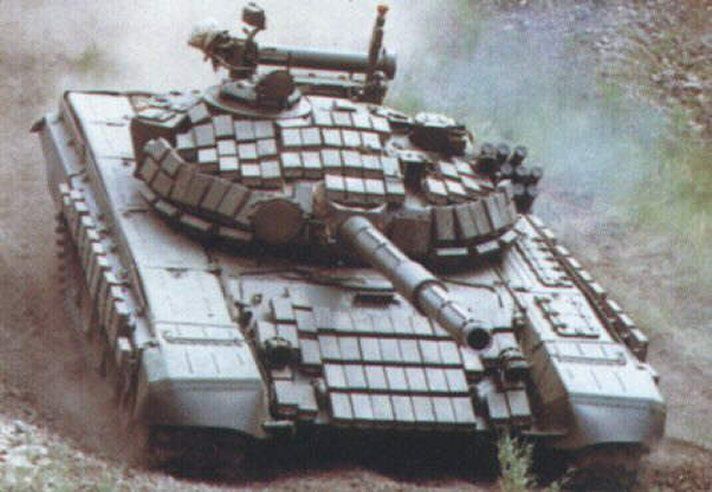
Recientemente, en mi grupo de juego hemos decidido introducirnos en los Wargames de escaramuzas a 20mm ambientados en la época actual (1980-2000), y para variar voy a comenzar a reunir una fuerza soviética / Federación Rusa. En un principio pensé en una compañía VDV (lo sé, como el 99% de los jugadores que juegan rusos), pero la dificultad de conseguir el equipo (no hay muchos BMD-2 disponibles por aquí) y unas figuras que me sedujeran hicieron que me decantase por una fuerza mecanizada de élite, en concreto, una agrupación de la 2ª División Mecanizada de la Guardia 'Tamanskaya', la famosa Guardia Taman o bien, de la 4ª División Acorazada de la Guardia 'Kantemirovskaya' (la División Kantemir). Tras la reforma del Ejército Ruso en 2009, las antiguas Divisiones han sido transformadas en brigadas para aumentar su flexibilidad y su efectividad, pero nosotros jugaremos con anterioridad a esa fecha.
Recently, in my gaming group we decided to introduce ourselves into 20mm Modern Warfare (1980-2000), and this time I am assembling a Soviet / Russian Federation force. At first I thought of a company VDV (yeah I know, like 99% of guys playing Russian), but the difficulty of getting the necessary equipment (not many BMD-2 available here) and figures that pleased my eye made me to turn my head to an elite mechanized force instead, namely a force from whether 2nd Guards Motor Rifle Division 'Tamanskaya', the famous Taman Guards or 4th Guards Armoured Division 'Kantemirovskaya' (Kantemir Division). I'm aware that after the reform of the Russian Ground Forces in 2009, the old Divisions were disbanded and split into brigades to increase their flexibility and effectiveness, but we'll play prior to that date, anyway.
sábado, 1 de diciembre de 2012
Vollkettenaufklärer 38(t) 'Kätzchen'
(English text below)
En 1943, el Heereswaffenamt Wa.Prüf-6 decidió impulsar el desarrollo de un nuevo vehículo de orugas para servir en tareas de reconocimiento y transporte de tropas para el Frente del Este, donde se requerían mayores capacidades de movimiento campo a través. Tanto Auto Union como BMM (Böhmisch-Mährische Maschinenfabrik) presentaron diversos prototipos bien entrado 1944, resultando ganadora la propuesta de BMM, que empleaba el venerable chasis del Panzer 38(t), y presentaba mayor movilidad, fiabilidad mecánica y protección que sus competidores.
In 1943, Heereswaffenamt Wa.Prüf-6 decided to develop a new fully-tracked vehicle fitted to meet the needs of Eastern Front's harsher conditions as a personnel carrier and a reconnaissance unit. Both Auto Union and BMM (Böhmisch-Mährische Maschinenfabrik) presented several prototypes well into 1944, being selected BMM's proposal, which was based on the venerable PzKpfw 38(t) and had greater mobility, mechanical reliability and armor protection than its competitors
En 1943, el Heereswaffenamt Wa.Prüf-6 decidió impulsar el desarrollo de un nuevo vehículo de orugas para servir en tareas de reconocimiento y transporte de tropas para el Frente del Este, donde se requerían mayores capacidades de movimiento campo a través. Tanto Auto Union como BMM (Böhmisch-Mährische Maschinenfabrik) presentaron diversos prototipos bien entrado 1944, resultando ganadora la propuesta de BMM, que empleaba el venerable chasis del Panzer 38(t), y presentaba mayor movilidad, fiabilidad mecánica y protección que sus competidores.
In 1943, Heereswaffenamt Wa.Prüf-6 decided to develop a new fully-tracked vehicle fitted to meet the needs of Eastern Front's harsher conditions as a personnel carrier and a reconnaissance unit. Both Auto Union and BMM (Böhmisch-Mährische Maschinenfabrik) presented several prototypes well into 1944, being selected BMM's proposal, which was based on the venerable PzKpfw 38(t) and had greater mobility, mechanical reliability and armor protection than its competitors
miércoles, 21 de noviembre de 2012
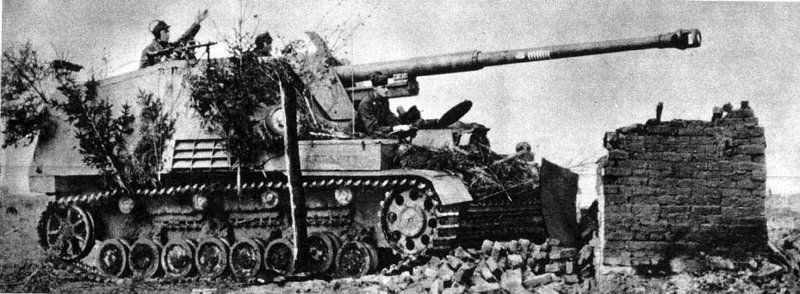
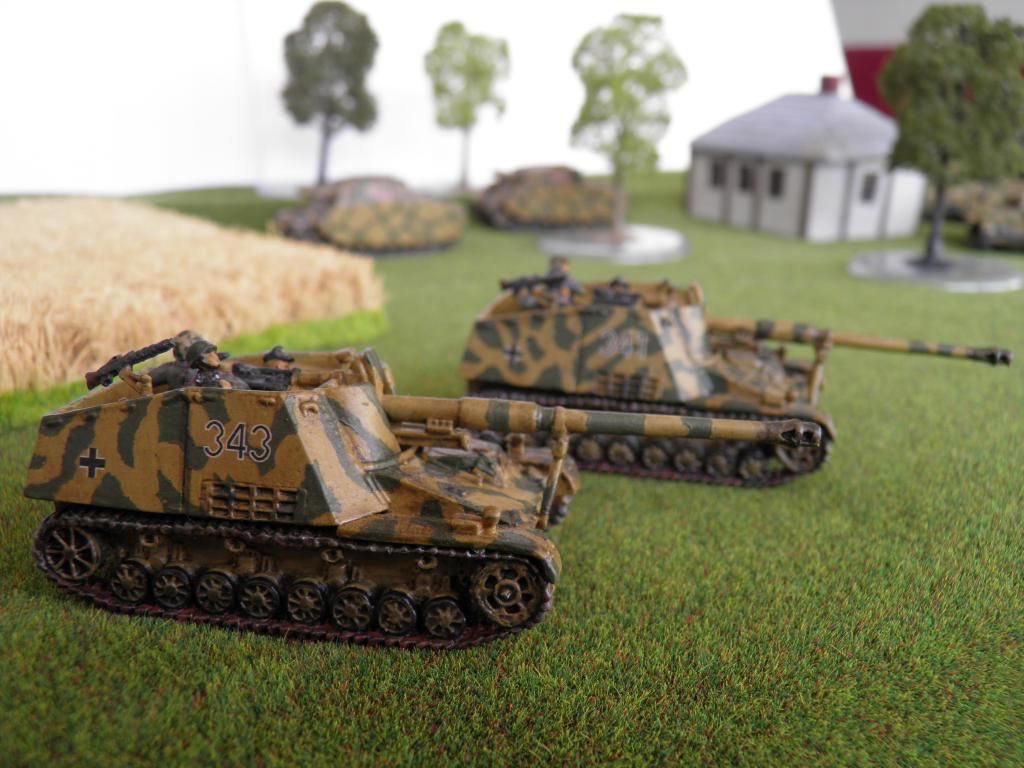
Sd.Kfz. 164 'Nashorn'
(English text below)
Tras las desagradables experiencias frente a los carros pesados KV en el Frente del Este, la Wehrmacht comprendió la necesidad de impulsar el desarrollo de un cazacarros autopropulsado pesado que pudiese hacerles frente a grandes distancias. La firma berlinesa Alkett (Altmärkische Kettenwerke GmbH) diseñó a principios de 1942 un vehículo sencillo, basado en el chasis Geschützwagen III/IV (el mismo que el del Hummel), con componentes de los Panzer III y IV, y armado con el poderoso PaK 43/1 L/71, una versión larga y más potente del famoso 88.
After a number of unpleasant experiences against KV heavy tanks on the Eastern Front, the Wehrmacht realized the urge to develop a self-propelled tank-destroyer that could cope with them at long distances. The firm Alkett (Altmärkische Kettenwerke GmbH) of Berlin designed in early 1942 a simple vehicle, based on the new Geschützwagen III / IV chassis (same as Hummel), which used components of the Panzer III and IV, and armed it with the powerful PaK 43/1 L/71, a more potent and longer version of the (in)famous 88.
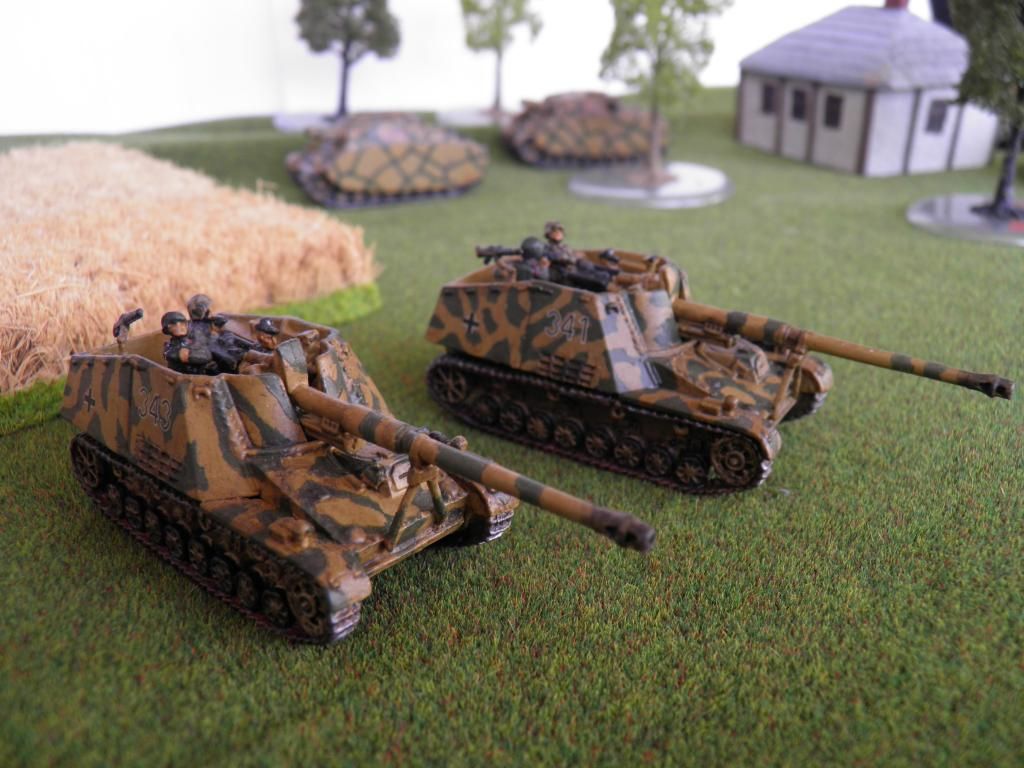
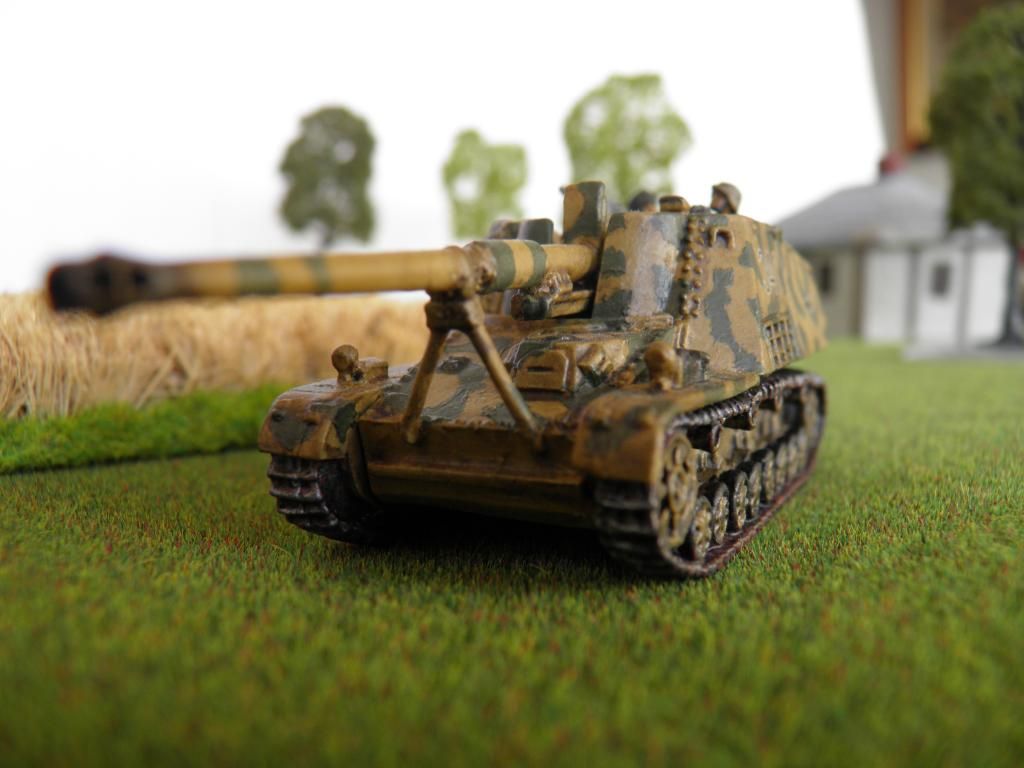
El enorme cañón se acomodó tal cual (incluyendo el escudo) en la parte trasera, con lo que hubo que desplazar el motor al centro, construyéndose alrededor una superestructura de techo abierto. Para evitar problemas de sobrepeso se redujo el blindaje al mínimo necesario para ofrecer a la tripulación protección frente a la metralla y a las armas ligeras.

The huge gun was mounted complete (including the gun shield) in the rear of the chassis, so the engine had to be moved to the center, and an open-topped superstructure was built around it. To avoid overweight issues, armor thickness was reduced to the minimum required to provide the crew full protection from shrapnel and small arms fire.
El enorme cañón se acomodó tal cual (incluyendo el escudo) en la parte trasera, con lo que hubo que desplazar el motor al centro, construyéndose alrededor una superestructura de techo abierto. Para evitar problemas de sobrepeso se redujo el blindaje al mínimo necesario para ofrecer a la tripulación protección frente a la metralla y a las armas ligeras.
Suscribirse a:
Entradas (Atom)